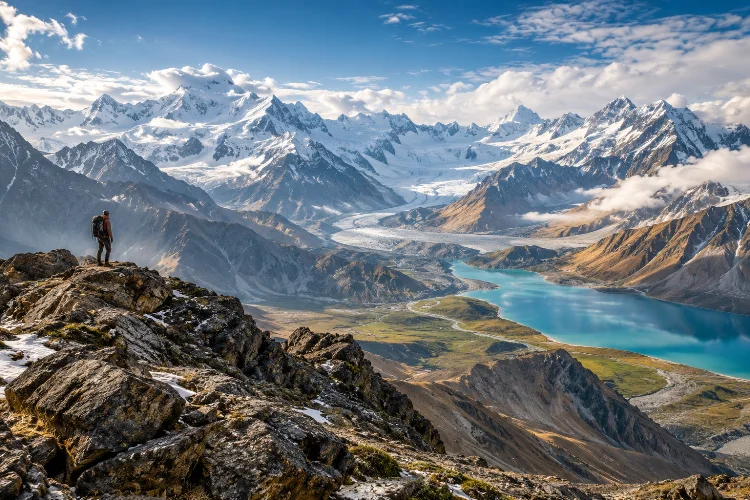
Asia changes dramatically when you travel upward. Dense cities disappear, forests thin out, valleys widen, and eventually the landscape becomes a mixture of bare rock, glaciers, alpine grasslands, high deserts, and snow-covered peaks.
That is what makes exploring high-altitude regions across Asia’s major mountain ranges such a different kind of journey.
The Himalayas alone contain some of the planet’s highest terrain, but they are only part of a much larger mountain system. The Karakoram, Pamirs, Tien Shan, Hindu Kush, and Altai create enormous highland regions stretching across South and Central Asia.
Travel here is rarely effortless. Roads may cross passes above 4,000 meters, weather can shift quickly, and altitude requires more careful planning than a normal city itinerary.
Yet these landscapes offer more than dramatic views. Buddhist monasteries, pastoral communities, historic trade corridors, isolated villages, trekking routes, and high-altitude lakes reveal how people have adapted to some of Asia’s most demanding environments.
The Himalayas Offer Far More Than Everest
For many travelers, “Himalayas” immediately means Mount Everest. In reality, the mountain system stretches across several countries and contains a huge variety of travel environments.
Nepal remains one of the easiest places to understand that diversity. The Nepal Tourism Board notes that many trekking routes travel between roughly 1,000 and 4,000 meters, while parts of popular itineraries rise above 5,000 meters.
Everest, Annapurna, and Langtang remain established trekking regions, while Dolpo and Kanchenjunga offer more remote alternatives.
The landscape changes constantly with elevation.
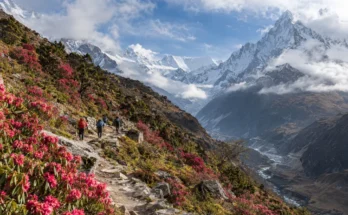
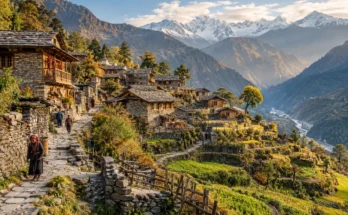
Lower valleys can contain forests and agricultural villages, while higher routes move through alpine terrain toward glaciers and mountain passes. Cultural experiences also shift as travelers encounter communities shaped by different languages, religions, and trading histories.
The best Himalayan trip therefore does not have to involve climbing anything. Multi-day walking, village stays, monasteries, and scenic mountain roads can provide just as much insight.
Ladakh Combines High Desert With Himalayan Culture
Ladakh feels almost like another planet compared with India’s tropical and lowland regions.
Leh itself sits at an average elevation of about 11,500 feet, or roughly 3,500 meters. Beyond the town, landscapes extend toward high passes, Buddhist monasteries, stark valleys, and lakes such as Pangong Tso at about 4,350 meters and Tso Moriri at roughly 4,595 meters.
This is a cold high-altitude desert rather than the green mountain scenery many visitors expect from the Himalayas.
Irrigated villages create narrow strips of green between dry mountains, while monasteries often occupy dramatic ridges overlooking valleys.
Ladakh also demonstrates why acclimatization should influence itinerary design.
Flying directly into Leh means arriving at considerable altitude almost immediately. Instead of scheduling a major pass or difficult trek on the first day, allow your body time to adjust and explore the town slowly.
That quieter start often improves the entire journey.
The Karakoram Delivers Mountains on an Enormous Scale
Move northwest and the terrain becomes even more dramatic.
Pakistan’s Gilgit-Baltistan lies among the Himalaya, Karakoram, and Hindu Kush systems. Pakistan’s official tourism authority notes that the region contains five of the world’s 8,000-meter peaks and more than 50 summits exceeding 7,000 meters.
Skardu is a major gateway for expeditions toward some of the Karakoram’s giant peaks, including K2, while valleys such as Hunza provide a more accessible way to experience the region.
The Karakoram Highway adds another dimension.
Rather than approaching the mountains entirely on foot, travelers can follow one of Asia’s great highland road corridors through deep valleys, villages, river landscapes, and increasingly dramatic peaks.
Travel distances can look deceptively short on a map, though.
Mountain roads are vulnerable to weather and geological conditions, so schedules should remain flexible. Remote accomodation and transport are also more limited than in major Himalayan tourism centres.
The Pamirs Feel Like the Roof of Central Asia
Tajikistan’s Pamir region offers one of Asia’s most extreme high-altitude landscapes.
Tajik National Park covers more than 2.6 million hectares and includes broad eastern plateaus, heavily glaciated mountain areas, hundreds of lakes, and peaks rising above 7,000 meters.
UNESCO describes the Pamirs as the third-highest mountain ecosystem after the Himalayas and Karakoram.
This is not a landscape of densely populated mountain towns.
Settlements can be widely separated, vegetation becomes sparse, and vast sections of terrain feel remarkably empty.
The famous Pamir Highway introduces travelers to this scale without requiring a technical climbing expedition. Journeys can include high passes, Wakhan Valley landscapes, isolated villages, and wide plateaus stretching toward neighbouring mountain systems.
But remoteness changes the planning style.
Fuel, food, vehicle reliability, permits, weather, and communication matter more here than on a conventional urban trip. Leaving extra days is sensible rather than inefficient.
The Tien Shan Blends Alpine Landscapes With Central Asian Culture
The Tien Shan stretches across a huge section of Central Asia and offers one of the best combinations of mountains and relatively accessible cultural travel.
The UNESCO-listed Western Tien Shan alone extends across Kazakhstan, Kyrgyzstan, and Uzbekistan. Elevations within the protected landscape range from about 700 to 4,503 meters, producing everything from lower forests to alpine ecosystems.
Kyrgyzstan is particularly attractive for travelers interested in trekking without committing to Himalayan-scale expeditions.
High valleys, alpine lakes, summer pastures, yurt camps, and horse-based travel traditions create a landscape that feels both natural and cultural.
The mountains have historically supported pastoral lifestyles rather than just permanent urban settlements. That makes the journey fundamentally different from visiting a mountain resort.
Spending several nights in one valley rather than moving constantly can reveal far more about how local communities use the enviroment.
The Altai Offers a Different Kind of Mountain Wilderness
The Altai sits farther north than the Himalaya–Karakoram system and produces a noticeably different mountain landscape.
Instead of endless high desert, sections of the range contain steppe, forests, alpine meadows, glaciers, lakes, and broad plateaus.
UNESCO’s Golden Mountains of Altai property covers more than 1.6 million hectares and represents an unusually complete sequence of vegetation zones, from steppe and forest-steppe through mixed forest to subalpine and alpine environments. It also provides habitat for species including the snow leopard.
The wider Altai mountain system crosses parts of Russia, Mongolia, Kazakhstan, and China, creating a culturally diverse frontier landscape.
Compared with Nepal or Ladakh, tourism infrastructure can be much more fragmented.
Border regulations, permits, seasonal access, and tranportation conditions vary considerably between countries. That makes the Altai better suited to travelers willing to research one specific region rather than trying to cross the entire mountain system in a single itinerary.
Altitude Changes the Way You Should Build an Itinerary
High-altitude travel should not be planned like a normal road trip.
The CDC notes that altitude illness can become a concern when travelers reach elevations above about 8,000 feet, or roughly 2,400 meters. Gradual ascent gives the body more time to adapt to lower oxygen levels.
The most important mistake to avoid is rushing upward.
Above about 2,750 meters, the CDC recommends gradual increases in sleeping altitude and additional acclimatization time during longer ascents. Anyone developing worsening altitude symptoms should not continue climbing higher.
This has practical consequences for itinerary design.
Do not land at altitude, immediately cross an enormous pass, and then begin an intense trek the next morning. Give yourself slower days early in the trip.
Also remember that fitness does not guarantee protection from altitude illness. Even strong hikers need time to acclimatize.
Seasons Matter More in the High Mountains
Mountain seasons are short and highly regional.
A pass that is easy to cross in midsummer may be inaccessible under snow several months later. Spring melt can affect roads, while summer monsoons create different challenges in Himalayan regions.
Ladakh, for example, becomes easier to explore during the warmer part of the year when many high-road routes are more accessible. India’s tourism authority highlights roughly May to September for several high-altitude attractions around Leh.
Central Asian ranges follow different patterns.
Summer often provides the widest access to high valleys and trekking routes, while winter transforms many areas into destinations for specialized snow travel rather than conventional sightseeing.
Do not choose a mountain region simply because flights are cheap.
First check whether the specific roads, passes, trekking routes, and guesthouses you need normally operate during that season.
Travel Slowly Enough to Experience Mountain Culture
The temptation in spectacular mountain regions is to chase viewpoints.
That can turn a meaningful journey into a constant series of photo stops.
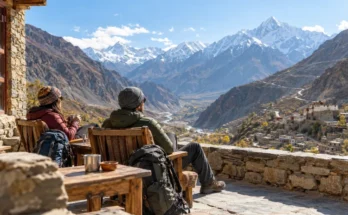
The strongest itineraries combine scenery with ordinary mountain life. Spend time in villages, visit monasteries where appropriate, stay in family-run guesthouses, try regional food, and learn how agriculture or pastoralism functions at altitude.
Remote communities also deserve privacy.
Ask before photographing people, respect sacred sites, and avoid treating traditional homes or pastoral camps as scenery created for visitors.
Longer stays usually help.
Four nights based in one mountain valley can reveal more than four seperate one-night stops, especially when road journeys are slow.
High-altitude Asia rewards patience.
Exploring high-altitude regions across Asia’s major mountain ranges reveals just how varied the continent’s mountain geography really is.
Nepal’s Himalayas combine trekking with village culture, Ladakh creates a striking high-desert experience, and Pakistan’s Karakoram delivers some of the world’s most dramatic mountain scenery.
Farther north, the Pamirs offer immense plateaus and remote road journeys, while the Tien Shan combines alpine landscapes with Central Asian pastoral traditions. The Altai adds forests, steppe, glaciers, and another completely different mountain ecosystem.
These destinations should never be rushed. Build acclimatization into the itinerary, respect seasonal access, and leave room for delays.
Choose one mountain region, stay longer than you originally planned, and let altitude slow the journey down. That is often when Asia’s highest landscapes become the most memorable.