
Monsoon season has a strange reputation among travelers. Mention Southeast Asia during the rainy months and someone will immediately imagine two weeks of nonstop storms, flooded streets, cancelled boats, and a vacation spent staring through a hotel window.
Reality is much more complicated.
Rainfall varies enormously between countries, coastlines, islands, and even different sides of the same mountain range. One destination may experience rough seas while another, only a short flight away, gets mostly short afternoon showers.
The World Meteorological Organization notes that Southeast Asia’s climate is strongly shaped by monsoons, while larger patterns such as El Niño and La Niña can further influence regional conditions.
That is why advanced travel planning for monsoon seasons in Southeast Asia is not about avoiding rain completely.
It is about understanding regional patterns, designing adaptable routes, protecting important connections, and knowing when weather actually changes what you can safely do.
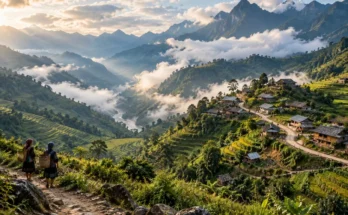
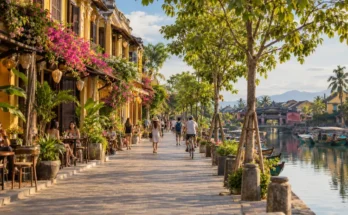
With the right strategy, wet-season travel can mean greener landscapes, fewer crowds, and surprisingly rewarding trips.
Stop Thinking of Southeast Asia as Having One Rainy Season
The biggest planning mistake is assuming that “monsoon season” means the same months everywhere.
It does not.
Malaysia alone experiences two major monsoon regimes. The Southwest Monsoon generally runs from late May through September, while the Northeast Monsoon usually occurs from November to March.
The latter can bring especially heavy rainfall to the east coast of Peninsular Malaysia and parts of Borneo.
Thailand also has strong regional differences. Central areas generally experience their wetter period from roughly May to October, while southern Thailand’s Andaman and Gulf coasts do not follow exactly the same seasonal pattern.
Vietnam is even more complicated because of its long north-to-south geography. Northern, central, and southern regions experience different rainfall calendars, and Vietnam Tourism specifically notes that weather conditions can vary considerably between regions.
Plan by region, not simply by country.
Build Your Route Around Weather Windows
Advanced itinerary planning starts by identifying which parts of a route are most weather-sensitive.
Cities are usually easier to manage in rain. Museums, restaurants, cafés, markets, temples, shopping districts, and covered attractions provide alternatives when a storm arrives.
Islands are different.
Rough seas can cancel ferries, diving excursions, and island-hopping trips. Vietnam Tourism, for example, notes that Phu Quoc can experience stormier conditions from July through September and that dangerous sea conditions may affect ferry travel.
This suggests a simple strategy: put weather-dependent destinations into the strongest climate window available and use major cities as flexible anchors around them.
If your itinerary includes Bangkok, an island, and Kuala Lumpur, the island section deserves more weather attention than either city.
You are not trying to guarantee sunshine. You are protecting the activities that depend most heavily on it.
Understand That Monsoon Rain Is Not Always All-Day Rain
A rainy-season forecast can look worse than the actual travel experience.
In tropical climates, a weather app may display rain every day simply because thunderstorms are possible during part of each day.
Cambodia’s Ministry of Tourism notes that its wet season generally runs from May to October, but rainfall frequently arrives as relatively concentrated heavy downpours rather than uninterrupted rain lasting from morning until night.
The Philippines provides another useful example. Its Southwest Monsoon, locally called Habagat, typically brings moist southwesterly winds and increased rainfall to western areas, but PAGASA also recognizes “monsoon breaks” that can produce several days or even weeks of reduced rainfall.
That uncertainty should influence how you plan your days.
Schedule outdoor priorities earlier when local patterns favour morning stability, but keep a flexibile afternoon plan. Move museum visits, spa time, food tours, or indoor attractions around the forecast rather than locking everything into fixed dates weeks ahead.
Treat Islands, Boats, and Mountains as Higher-Risk Segments
Not every activity is equally vulnerable to monsoon weather.
A downpour in Singapore may inconvenience a walking tour. The same storm system affecting a small island may change ferry operations completely.
Mountain destinations bring another layer of risk.
Heavy rainfall can produce landslides, muddy trekking routes, poor visibility, swollen rivers, and slower roads. Even when a destination remains accessible, travel times can increase substantially.
This is why advanced planning should classify itinerary segments by weather sensitivity.
Cities are generally low to moderate risk. Long-distance roads through mountainous terrain may be moderate to high risk. Ferries, remote islands, diving trips, multi-day treks, and small-aircraft connections deserve the greatest buffer.
Do not schedule your international flight home immediately after three days on a remote island connected by one daily boat.
Adding one night in a well-connected city may look inefficient on paper, but it can protect an expensive long-haul flight.
Use Buffer Days Strategically
A buffer day is not a wasted day.
It is insurance built into the itinerary.
Suppose you are spending four nights on an island before flying internationally from Bangkok, Manila, or Kuala Lumpur. Instead of returning to the gateway city on the same day as your international departure, arrive one day earlier.
If everything runs normally, you gain an extra city evening.
If your ferry is delayed, you have breathing room.
Buffer days become especially important when two uncertain forms of transporation depend on one another – for example, a ferry connecting to a domestic flight that then connects to an international flight.
The more connections involved, the less aggressively you should schedule them.
A sophisticated itinerary is not the one with zero empty hours. It is the one that can absorb disruption without collapsing.
Book the Right Parts of the Trip Differently
Not every reservation deserves the same level of commitment.
During a stable dry-season trip, booking everything far ahead may work perfectly. During monsoon season, flexibility can have more value than a slightly lower price.
Consider paying a little more for cancellable accomodation around weather-sensitive destinations. Avoid stacking several expensive non-refundable tours on consecutive days.
Keep transport options open where possible.
Your international flights may need to be fixed, but a domestic flight, ferry, or two-night beach stay could remain adjustable until closer to departure.
This does not mean traveling without reservations.
Popular destinations can still fill up, particularly around festivals or school holidays. The objective is to separate bookings into two categories: things that genuinely need early commitment and things that benefit from remaining adaptable.
That distinction can save both money and frustration.
Monitor Official Forecasts, Not Just Weather Apps
A general weather app is useful for deciding whether to carry an umbrella.
It is less useful for evaluating a developing tropical storm, flood threat, monsoon surge, or major regional climate shift.
National meteorological agencies provide much more relevant information.
PAGASA publishes official Philippine monsoon and climate advisories, while Malaysia’s METMalaysia explains regional monsoon conditions and severe-weather patterns.
Indonesia’s BMKG publishes seasonal forecasts covering the timing and characteristics of wet and dry seasons across hundreds of climate zones.
This matters because seasonal calendars are averages, not promises.
Indonesia’s rainfall timing, for example, is influenced not only by the Asia-Australia monsoon but also by larger climate systems such as ENSO, the Indian Ocean Dipole, sea-surface temperatures, and the Intertropical Convergence Zone.
Check long-range patterns during planning, then local forecasts again several days before each major movement.
Plan Different Backup Activities for Each Destination
“Stay in the hotel if it rains” is not much of a backup strategy.
Instead, give each destination a Plan A and Plan B.
Your Plan A might involve cycling around temples, hiking, snorkeling, or visiting an outdoor market. Plan B could include museums, cooking classes, galleries, covered food markets, cafés, spa treatments, or historical buildings.
This works especially well in major cities.
Bangkok, Hanoi, Kuala Lumpur, Singapore, Ho Chi Minh City, Jakarta, and George Town all have enough indoor or semi-covered activities that rainy weather does not automatically ruin the day.
You can also move activities seperately rather than cancelling the entire schedule.
If Tuesday morning looks dry and Wednesday looks stormy, shift the outdoor tour forward and move a museum visit backward.
Simple flexibility is often more useful than trying to predict tropical weather with perfect accuracy.
Pack for Humidity, Not Just Rain
A giant heavy raincoat is not always the ideal tropical-weather solution.
Humidity can make waterproof clothing uncomfortable very quickly.
A lightweight rain shell or compact poncho is usually more practical. Quick-drying clothing, breathable footwear, a waterproof phone pouch, and dry bags for electronics can also make a major difference.
Carry a second pair of shoes if your itinerary involves repeated outdoor activities.
Wet shoes that never properly dry can become more annoying than the rain itself.
For electronics and travel documents, think in layers. A waterproof backpack cover helps, but sensitive items should also be protected inside individual waterproof bags.
Preparation does not need to become extreme.
The objective is simply to make an unexpected 30-minute tropical downpour an inconvenience rather than a small disaster.
Know When Changing the Route Is the Smart Choice
Flexibility sometimes means accepting that the original plan no longer makes sense.
If several days of rough seas are forecast, forcing an island itinerary because the hotel is already booked may create unnecessary stress. Switching to a city, inland heritage destination, or different coastline can produce a much better trip.
This is especially relevant in countries with strong regional climate variation.
Vietnam Tourism points out that weather can be dramatically different between northern, central, and southern Vietnam at the same time. Thailand and Malaysia likewise have coastlines influenced differently by seasonal monsoon systems.
Instead of asking, “Will Southeast Asia be rainy in September?” ask, “Which part of Southeast Asia offers the best match for my activities in September?”
That small change produces much smarter intineraries.
Advanced travel planning for monsoon seasons in Southeast Asia is less about escaping rain and more about managing uncertainty intelligently.
Different coastlines and countries follow different seasonal patterns, while storms, monsoon breaks, mountains, and larger climate systems can change conditions from year to year.
Smart travelers protect vulnerable ferry and island connections, use buffer days, book flexible accommodation, monitor official forecasts, and keep realistic backup activities available.
Rainy-season travel can still be excellent. Landscapes become greener, popular destinations may feel quieter, and short tropical downpours often leave plenty of usable daylight.
So do not automatically cancel a Southeast Asia trip because the calendar says “wet season.” Study the specific region, design an adaptable route, and let flexibility become part of the travel plan.