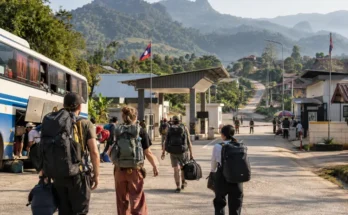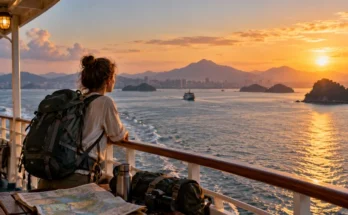
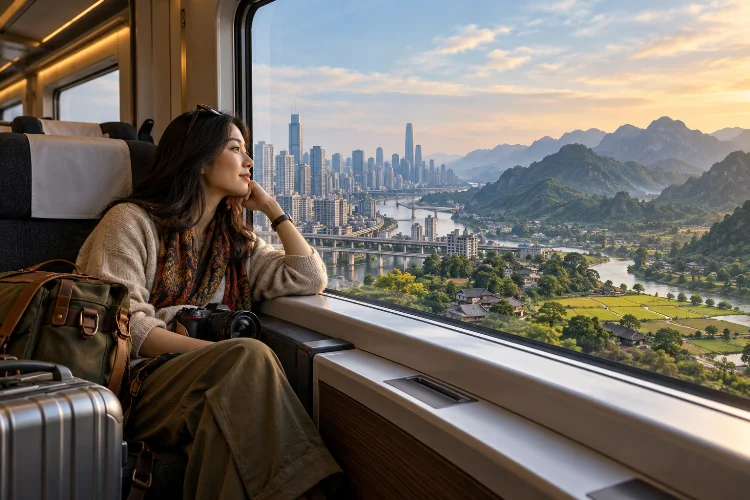
Asia makes it easy to fall into two opposite travel styles. Some itineraries jump from Tokyo to Seoul, Bangkok, Singapore, and Hong Kong, spending the entire trip surrounded by skyscrapers and efficient public transport.
Others chase mountains, islands, rural villages, and remote valleys while avoiding big cities almost completely. Neither approach is necessarily wrong. The problem is that both can become exhausting when taken too far.
Learning how to balance major cities and remote regions across Asia creates a more varied journey. Large cities offer museums, nightlife, food scenes, international transport, shopping, and practical services.
Remote areas provide slower rhythms, dramatic landscapes, village culture, outdoor adventures, and experiences that are difficult to reproduce in metropolitan centres.
The best itineraries use both strategically. A major hub becomes a place to arrive, recover, organize, and connect. A remote region then gives the trip breathing room and depth.
The goal is not a perfect 50/50 split. It is creating a rhythm that keeps every part of the journey feeling fresh.
Use Major Cities as Transportation Anchors
Large Asian cities are useful for much more than sightseeing.
They often provide the easiest international flights, railway connections, medical services, shopping, luggage storage, and last-minute travel arrangements. That makes them ideal anchor points around more complicated destinations.
Tokyo demonstrates this particularly well. Japan’s national tourism organization highlights an extensive combination of Shinkansen, conventional trains, buses, domestic flights, ferries, and local transport, allowing travelers to move efficiently from major cities toward smaller regional destinations.
Instead of treating Tokyo as one attraction among many, think of it as part of the route infrastructure.
Spend several days exploring the city, then use its connections to move toward mountain towns, rural prefectures, or smaller heritage centres.
The same principle works with Seoul, Bangkok, Hanoi, Kathmandu, and other major gateways.
Build Remote Sections Around One Strong Base
Remote travel becomes tiring when every night involves a different village.
Choose a practical base instead.
Northern Vietnam offers a useful example. Ha Giang lies around 300 kilometres north of Hanoi and is reached by road, while the wider province contains mountain passes, remote towns, trekking opportunities, and ethnic minority villages.
Rather than trying to see the region as a quick side trip, give it several nights.
Use Ha Giang City, Dong Van, or another appropriate base to explore surrounding landscapes slowly. This creates time for weather delays, longer road journeys, and unexpected stops.
The same strategy works in mountain regions throughout Asia.
A remote base may not offer hundreds of attractions, but it allows you to experience the surrounding enviroment without packing every morning.
Alternate High-Intensity and Low-Intensity Destinations
Travel fatigue is often caused by rhythm rather than distance.
Four major cities in succession can mean constant traffic, museums, reservations, crowded public transport, and nightlife.
Four remote areas in succession can create different problems: difficult transfers, basic facilities, limited food choices, and repeated logistical uncertainty.
Alternating them usually works better.
Try Seoul followed by a rural or mountain region. Combine Hanoi with Ha Giang. Pair Makassar with the Toraja highlands.
Indonesia’s official tourism information describes Tana Toraja as a highland region reached from Makassar, with villages, trekking landscapes, cultural traditions, and overland transportation forming part of the experience.
After several days in a remote region, returning to a city can actually feel exciting.
Suddenly reliable Wi-Fi, endless restaurants, trains, laundry services, and late-night cafés become luxuries again.
Give Remote Regions More Time Than the Map Suggests
One of the biggest itinerary mistakes is comparing distances without considering terrain.
A 100-kilometre railway journey in Japan may take little time. A similar distance across mountain roads can consume most of the day.
Remote Asia often involves narrow roads, seasonal conditions, shared vehicles, trekking approaches, or infrequent buses.
Nepal illustrates this clearly. Its tourism board notes that trekking regions range from heavily established areas such as Everest and Annapurna to more remote zones including Kanchenjunga and Dolpo, where additional permits and logistical planning may apply.
That difference should affect scheduling.
Do not give every destination two nights just because two nights worked in Osaka.
A remote mountain region may need four or five nights simply because reaching it takes longer and activities are more vulnerable to weather.
Travel days count as real days.
Use Cities for Practical Reset Days
Long trips become much easier when major cities function as reset points.
After a week of hiking, remote roads, or basic guesthouses, a city stay is an ideal moment to do laundry, replace equipment, withdraw money, organize onward transport, and simply rest.
This is especially valuable on journeys lasting several weeks.
South Korea’s rail system, for example, allows major urban centres to work as highly efficient transport nodes, with KTX and other trains connecting Seoul to cities including Busan and numerous regional destinations.
You can spend several days exploring Seoul, move outward, then return or continue through another well-connected hub.
Do not fill reset days with sightseeing from breakfast until midnight.
One quiet afternoon in a café or hotel can prevent the next week from feeling like work.
Plan More Buffer Around Remote Transportation
Major cities generally give travelers alternatives.
Miss one subway? Another arrives soon. A flight is cancelled? Large airports often have other services.
Remote tranportation is less forgiving.
One landslide, cancelled ferry, mountain storm, or delayed bus can affect an entire chain of bookings.
That is why an efficient itinerary should become less aggressive as destinations become harder to access.
Never schedule your international flight home immediately after a remote island, mountain village, or multi-day trek.
Return to a reliable city first.
The extra night may initially look unnecessary, but it acts as insurance against disruptions.
If everything operates perfectly, you simply gain another evening of restaurants, museums, or comfortable accomodation.
Match Remote Experiences to the Right Season
Cities are relatively adaptable to bad weather.
Rain in Tokyo or Bangkok might change your afternoon plans, but you still have restaurants, indoor attractions, trains, and shopping.
Remote landscapes are different.
Mountain roads can become difficult, trekking trails may be affected by snow or rain, and seasonal conditions can influence whether rural areas are comfortably accessible at all.
Bhutan is a useful example because its tourism authority presents everything from city-based cultural experiences to trekking, camping, cycling, mountain passes, and journeys through rural villages.
Different activities require different levels of planning and seasonal awareness.
This means the remote portion of your itinerary should usually determine the overall timing.
Choose the best realistic season for the mountain, island, or rural section first.
Cities can fit around it much more easily.
Do Not Treat Remote Communities as Attractions
Travelers often arrive in small villages looking for “authentic” experiences.
That language can become problematic when it turns local residents into part of the scenery.
Remote communities are living places where people work, study, farm, use smartphones, run businesses, raise families, and change over time.
Respect matters more than getting the perfect photograph.
Ask before taking close portraits, especially inside homes or during ceremonies. Use local guides when they provide meaningful context, and choose locally owned restaurants, guesthouses, or transport when possible.
This is especially important in trekking areas.
Nepal’s tourism information emphasizes that mountain journeys provide opportunities to encounter diverse communities and cultural traditions along the route, not merely spectacular scenery.
The strongest travel experiences often come from understanding the community rather than simply observing it.
Pack Differently for Each Part of the Journey
Balancing cities and remote regions also changes packing strategy.
Urban travel rewards light luggage. Remote travel may require warmer layers, rain protection, walking shoes, basic medical supplies, or equipment that would seem unnecessary in Singapore or Tokyo.
The solution is not carrying everything imaginable.
Pack versatile clothing and research the demanding section of the trip first. If the remote portion requires specialized equipment only for a few days, renting locally may sometimes make more sense.
Japan even offers extensive luggage and storage systems that can simplify journeys when travelers want to leave larger bags behind while exploring smaller destinations.
Keeping luggage manageable also makes buses, stairs, rural guesthouses, and station transfers considerably easier.
Mobility matters more on a mixed itinerary than packing for every possible situation.
A Three-Week Trip Needs Selective Contrast
Three weeks may sound like enough time to cross half of Asia.
It usually is not.
A stronger itinerary might combine one or two major urban hubs with two slower regional sections.
For example, a Japan trip could combine Tokyo and Kyoto with a smaller mountain or rural area. Vietnam could pair Hanoi and Ho Chi Minh City with several days in Ha Giang or another regional destination.
A longer journey might combine Seoul, northern Vietnam, and one Southeast Asian highland region.
The exact destinations matter less than the rhythm.
Aim for several nights per major city and longer blocks where transportation becomes slower.
Avoid inserting a remote detour simply because it looks close on Google Maps.
If reaching it requires two seperate buses, a ferry, and half a day of waiting, treat it accordingly.
Understanding how to balance major cities and remote regions across Asia can make a complex itinerary feel dramatically easier.
Major cities provide transport, convenience, cultural institutions, food, and practical reset points. Remote areas add mountain landscapes, rural communities, outdoor adventures, and the slower experiences that often become the most memorable parts of a journey.
The strongest route alternates those advantages rather than choosing one travel style exclusively.
Give difficult destinations enough time, place buffer nights around remote transport, and let seasonal conditions determine when you leave the cities behind.
When planning your next Asia trip, start by choosing one major hub and one contrasting remote region. Build the connection between them carefully, stay longer in both, and resist adding another destination unless it genuinely improves the journey.